Hidden languages, cryptic symbols, and ancient landscapes. Rennes‑les‑Bains is more than a spa village—it is the stage where Abbé Henri Boudet mapped words, stones, and secrets that some believe hide treasures or ancient knowledge.

Henri Boudet: Priest, Scholar, and Enigmatic Researcher
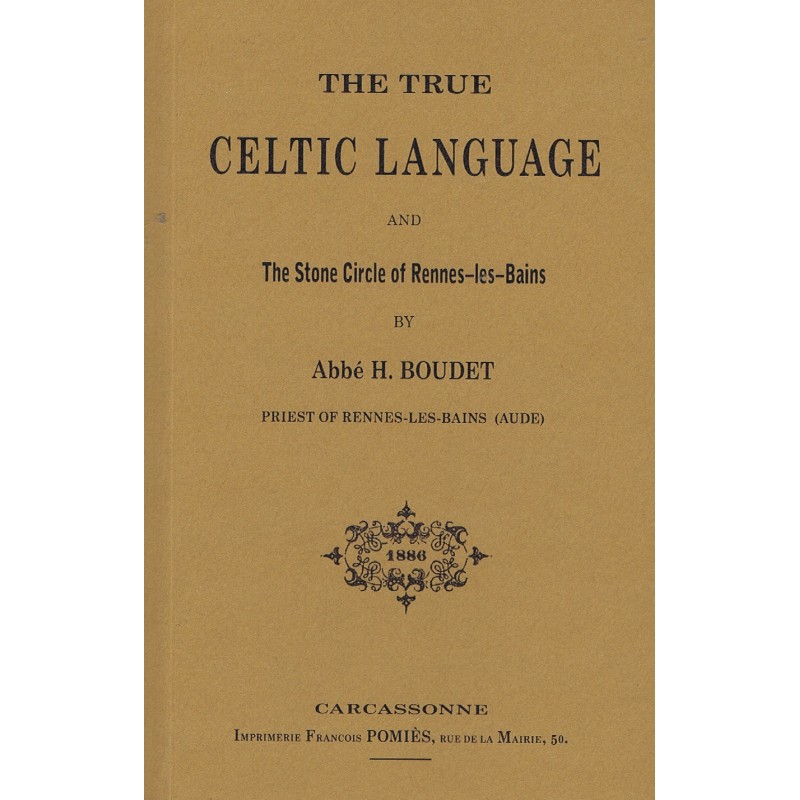
Abbé Henri Boudet served as parish priest of Rennes‑les‑Bains from 1872 to 1914. Unlike his near‑contemporary Abbé Saunière at Rennes‑le‑Château, Boudet lived modestly and avoided scandal. Yet he left a legacy that continues to fascinate researchers: his book La Vraie Langue Celtique et le Cromleck de Rennes‑les‑Bains (1886), a work blending linguistics, archaeology, and mysticism.
Boudet argued that the Celtic language was a key to decoding the region’s history. Place names, rock formations, and megalithic structures were, in his view, encoded messages left by ancient peoples. Some suggest he combined Christian symbolism with pagan traditions to reveal spiritual knowledge hidden across the valley.
Born in 1837 in Quillan, Boudet was ordained in 1861 and spent decades exploring the Languedoc region. He meticulously mapped cromlechs, dolmens, hills, and water sources, interpreting them as a network of sacred knowledge. His work hints at treasures, both material and spiritual, concealed in the landscape.
Rennes‑les‑Bains: The Spa Village and Its Hidden Clues
Rennes‑les‑Bains had been known since Roman times for its thermal waters. Nobility, clergy, and scholars frequented its baths, which were believed to have miraculous healing properties. The village’s constant flow of visitors made it an intellectual and spiritual hub, fertile ground for Boudet’s research.
According to Boudet, the very names of local hills, rivers, and springs concealed ancient meanings. For example, sites like “Les Pontils” or “Blanchefort” were interpreted as encoded markers, revealing histories and spiritual knowledge otherwise lost to time.


The Cromlech and Sacred Landscape
At the heart of Boudet’s thesis is the concept of a “cromlech”—stone circles or alignments scattered across the valley. He argued these formations were intentionally placed to transmit ancient knowledge, linking astronomy, spirituality, and the physical landscape. Hills, rivers, and rock outcroppings formed a subtle, monumental language.
Through this lens, Rennes‑les‑Bains is not just a spa village but a coded environment. Like Rennes‑le‑Château with its sunlight and stained glass, Boudet’s village speaks in stone, sound, and words—accessible only to those who understand the hidden language.
Possible Treasures and Hidden Knowledge
- Celtic Artifacts: Jewelry, weapons, and ritual objects hidden in megalithic sites.
- Sacred Relics: Items related to Catharism or the Knights Templar, potentially stored in caves or crypts.
- Roman Treasures: Coins, texts, and artifacts from the region’s thermal bath era.
- Codified Manuscripts: Documents connecting Celtic and Christian traditions, encoded in landscape features.
Henri Boudet and Abbe Saunière
Boudet and Saunière were contemporaries, and some researchers theorize they coordinated: one encoding linguistic and symbolic knowledge, the other protecting physical or monetary treasures. Rennes‑les‑Bains and Rennes‑le‑Château may therefore be complementary nodes of a centuries-old system of hidden knowledge.
Documentaries & Videos
- Exploring Rennes‑les‑Bains and Henri Boudet (YouTube)
- 🎞The Mystery of Rennes‑le-Château Documentary
- Atlas Obscura: Languedoc Mysteries
Post a Comment